
Cribbage - Classic Card Games
MobilityWareCard
4.495.00 Reviews
- Version
- 1.1.5.444
- Installs
- 100.00K
- Age Rating
- Everyone
Screenshots
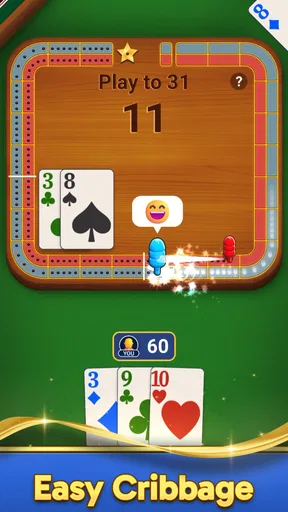
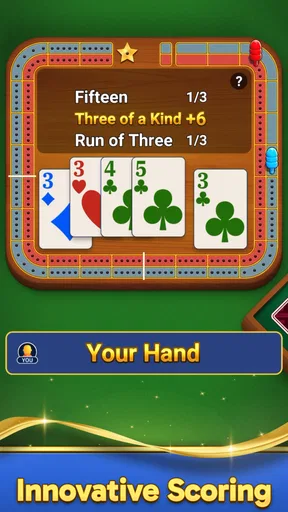

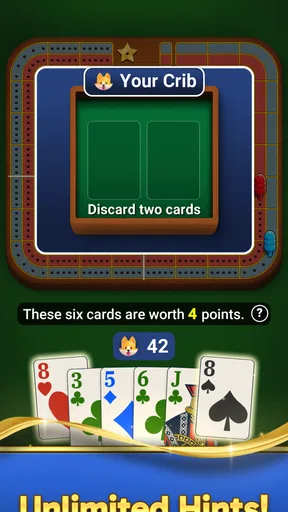

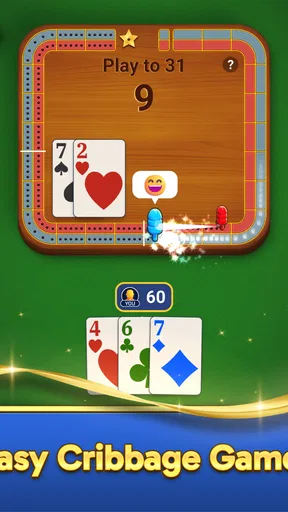

Our Review of Cribbage - Classic Card Games
 Analysis by Appyee
I approached Cribbage - Classic Card Games as the kind of card game I could pick up for a short break, rather than something demanding a long session. That first impression still holds: it is a focused cribbage game from MobilityWare, built around the familiar mix of choosing cards, building combinations, counting points, and trying to outplay an opponent. It is free to play, rated for Everyone, and available for devices running Android 8.0 or later.
What makes cribbage interesting is that the rules are simple to begin with but rarely feel completely solved. A hand can look ordinary until the right pair, run, or fifteen changes the count. This version works best when I want a quiet, turn-based card challenge that rewards attention without requiring fast reactions. It is less suitable if I am looking for a large collection of card games, a highly social multiplayer experience, or a visually elaborate adventure.
How clearly the game presents a traditionally fiddly card game
The biggest test for a digital cribbage game is not whether it knows the rules. It is whether I can understand what is happening while playing. Cribbage has several small scoring stages, including the hand, the crib, and the starter card, so a confusing interface can turn a relaxing match into a bookkeeping exercise. In my experience, the appeal of this game depends heavily on how comfortably I can follow those stages on my particular screen.
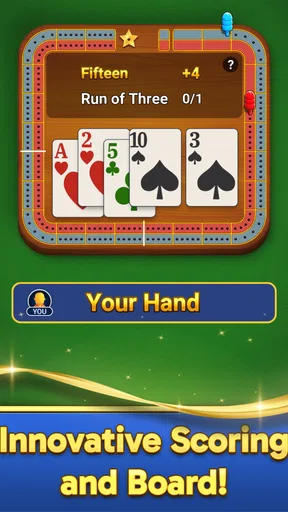
The card-focused layout gives the game a more approachable feel than playing with a physical deck and a separate scoring board. I do not need to keep cards arranged on a table, remember whose turn it is, or manually move a peg after every scoring change. That reduction in physical clutter is useful for anyone who finds a real cribbage board awkward to manage. It also makes short sessions easier because the game can be opened and played without preparing a surface.
At the same time, digital convenience does not remove every mental demand. I still have to read the cards, decide which ones belong in the crib, and watch the count during play. New players may understand the broad objective but need several rounds before the scoring patterns become natural. I would not judge the game harshly for that, because learning cribbage is part of the experience, but a complete beginner should expect a learning period rather than an instant, no-explanation card pastime.
The game’s store summary presents it as a classic strategy card game for playing on the go, and that description matches my use of it better than calling it an arcade title. The pace is deliberate. I have time to inspect my hand and consider whether keeping a pair, protecting a run, or sending useful cards to the crib is worth the risk. That slower rhythm can be helpful for players who prefer control and reflection, although people who want constant action may find it too measured.
For readability, I pay attention to how much information is shown at once. Cribbage requires cards, scores, turn status, and the current count to remain understandable together. A compact screen can make those elements feel crowded, especially on a smaller phone or when the device is held farther away. I found that playing with the screen clean and free from distractions matters more here than it would in a simple matching game.
The most useful habit is to treat each scoring phase as a separate task. I first look only at the cards involved in the current decision, then check the count or score before moving on. That sounds obvious, but it prevents the common mistake of trying to calculate the entire round in my head at once. It also makes the game more manageable for someone who needs extra time to process changing information.
Learning the rules without feeling lost
Cribbage is not difficult because the controls are complicated. It is difficult because several modest rules interact. A player who knows rummy or solitaire may recognize runs and pairs but still be unfamiliar with the crib, pegging, and the value of reaching the target score efficiently. I recommend approaching the first matches as practice rather than judging performance immediately.
One practical approach is to concentrate on recognizing common scoring shapes. Pairs are easy to spot, while combinations adding to fifteen become quicker with repetition. Runs can be deceptive because duplicate cards may create more than one scoring combination. I found it more useful to learn one pattern at a time than to pause constantly and attempt a perfect calculation on every hand.
The decision about what to discard is where the game becomes more strategic. Keeping a strong hand may be tempting, but the crib belongs to one player, so a discard can help the opponent. That creates a trade-off that a basic solitaire game does not offer. If I am playing against a computer opponent, I also have to think about the board position rather than judging every hand in isolation.
This makes the game a good fit for someone who wants a card title with genuine decisions but does not want real-time pressure. It is also a reasonable introduction to cribbage for a patient player who can learn through repeated rounds. I would skip it as a first choice for a child or adult who needs an immediately obvious ruleset with no specialized vocabulary, unless someone is available to explain the basics.
Navigation, attention, and motor comfort
Cribbage has a useful advantage for players with limited dexterity: the core activity is selecting cards and advancing through turns, not rapidly tapping targets or dragging objects under time pressure. I never feel forced to make a split-second gesture to keep up. That makes the game calmer than many card battlers and far less demanding than action games that rely on repeated swipes.
However, calm does not automatically mean accessible to every motor profile. Card selection still depends on accurately touching the intended item, and small screens can make neighboring choices feel close together. A player with tremors, reduced precision, or difficulty holding a phone steady may prefer a larger display or a supported device position. I found that using both hands or resting the phone on a surface reduces accidental movement during longer sessions.
There is also a cognitive-motor connection. When I am trying to count a hand, I want the interface to remain predictable so that an accidental tap does not interrupt my reasoning. The best way to reduce friction is to slow down, make one deliberate selection, and confirm that the intended card has been chosen before continuing. This is not a special setting; it is a practical playing method for anyone who values accuracy over speed.
For sensory comfort, a card game is generally less intense than a visually busy action title. The main content is static card information and score changes, so I can play it in a quiet setting without needing to track fast movement. That said, card suits, ranks, and score indicators still need to be distinguishable. A player with low vision or color-vision differences should test whether the card presentation is comfortable on their own device rather than assuming that every suit or number will be equally easy to identify.
This is where the physical context matters. Screen brightness, glare, viewing distance, and the size of the phone can change the experience considerably. I had an easier time reading the game in a shaded room than in direct daylight reflected across the display. Increasing the device’s text or display size may help in some situations, but it can also change how much information fits on screen, so I would test those adjustments before starting a serious match.
Playing during ordinary breaks and changing environments
The strongest everyday use case is a short waiting period. I can imagine opening it while waiting for an appointment, sitting on a train, or taking a quiet break between tasks. A cribbage round gives that time a little structure without demanding the commitment of a full-length strategy game. Because turns are not frantic, I can pause mentally when my surroundings become distracting and return to the decision.
That same quality has limits. A public place with announcements, interruptions, or poor lighting is not ideal when I am trying to count combinations. Cribbage rewards concentration, even though it does not require speed. If I am repeatedly interrupted, I may remember the broad situation but lose the exact reasoning behind my next move. In those moments, a simpler solitaire game is often the better companion.
For older players or people who prefer familiar tabletop games, the digital format can remove some barriers associated with a physical board. There is no need to handle a full deck, find pegs, or keep a score sheet nearby. A person who already knows cribbage may appreciate that portability. A person who depends on tactile card edges, physical pegs, or face-to-face cues may prefer the traditional version instead, because a screen cannot reproduce those sensations.
The game is also a sensible choice for a low-pressure personal routine. I can use one match as a mental warm-up, focusing on card combinations and decision-making. I would not describe it as a replacement for social play, though. Even when the opponent provides a challenge, the experience remains centered on the individual device. If the main reason I want cards is conversation around a table, a physical deck or a multiplayer-focused alternative will serve that purpose better.
Its age rating of Everyone makes it broadly approachable in terms of intended audience, but that does not mean every player will find the rules equally easy. The rating tells me the game is positioned for a general audience, while the actual suitability still depends on reading comfort, familiarity with cribbage, and tolerance for mental arithmetic. I would introduce it to a younger player by playing alongside them rather than handing over the phone and expecting the scoring to explain itself.
What can still get in the way
The main barrier is the game itself: cribbage has a learning curve that is easy to underestimate. A player may know how to select cards but still feel uncertain about the best discard, how pegging changes the value of a hand, or why a modest-looking position is strategically strong. That uncertainty is not a flaw unique to this app, but it affects whether the experience feels welcoming during the first sessions.
Another limitation is the narrow focus. This is a card game built around cribbage, not a broad card-game collection. If I want solitaire variations, trick-taking games, or quick casino-style rounds in the same download, I should look elsewhere. The focused design is a strength for a cribbage fan, but it can feel restrictive for someone who becomes bored with one ruleset.
I also would not choose it for someone who needs extensive customization before playing. Players with particular visual or motor needs may want to inspect the game directly and adjust their device setup. A larger screen, a stable stand, and a comfortable viewing angle can make a meaningful difference, but those are workarounds rather than proof that every access need is covered inside the game.
Battery and attention are practical considerations too. A single match may fit neatly into a break, but repeated games can turn into a longer session because the next hand is always easy to start. That is pleasant when I want a quiet pastime, yet less helpful if I am trying to limit screen time. I find it useful to decide in advance whether I am playing one round or continuing until a particular stopping point.
The current version is 1.1.5.444, and the game has reached over one hundred thousand installs. Its average rating is 4.4 from around one thousand three hundred ratings, which suggests that many players find the basic experience worthwhile. I treat those figures as a helpful sign rather than a substitute for checking my own comfort with the interface and the rules. Cribbage is a specialized taste, and a well-liked version can still be the wrong fit for someone who dislikes counting card combinations.
Who should install it, and who should pass?
I would recommend it to a player who already enjoys cribbage or wants a thoughtful card game that works well in short, self-contained sessions. It is especially appealing if I want to practice recognizing combinations, improve my discard decisions, or carry a familiar tabletop game without carrying a deck and board. The free price also makes it easy to try without treating the first session as a major commitment.
I would be more cautious for someone seeking a strong social layer, a huge variety of games, or a fast competitive format. I would also suggest a different kind of card app for a player who finds arithmetic stressful or who wants rules that can be understood in seconds. Cribbage rewards patience, and its charm appears gradually as the player starts seeing why a small choice can reshape an entire hand.
One useful way to decide is to ask what kind of attention I want to give the game. If I want to think quietly for a few minutes, it fits. If I need something I can play while watching television, walking between tasks, or responding to frequent messages, it is less suitable. The cards may not move quickly, but the strategic details still deserve focus.
My inclusive verdict after playing
MobilityWare’s game succeeds by keeping cribbage portable and focused. I like that it replaces the physical board’s clutter with a compact digital experience and gives the familiar rules a format that works naturally during travel or a short break. The absence of real-time pressure is a meaningful advantage for players who need time to read, calculate, and choose.
Its accessibility is practical rather than universal. The slower pace and limited motor demand help in many situations, while small-screen reading, card recognition, and the mental complexity of cribbage can still create barriers. I would make the experience more comfortable with a larger display, reduced glare, a stable phone position, and a willingness to learn the scoring gradually.
My final recommendation is simple: choose it when you want a calm, thoughtful cribbage match, not a general-purpose card collection. As a free Everyone-rated game for Android 8.0 and newer, it is easy to try and focused enough to reward regular play. I would keep it installed for quiet breaks and practice, while choosing a physical board for tactile social play and a simpler card game for moments when my attention is divided.
After spending time with it, I see the strongest value in the decisions between the obvious moves: what to keep, what to give away, and when a safe-looking choice is actually too generous to the opponent. Those choices give the game lasting interest without demanding speed. For the right player, that balance makes this a genuinely enjoyable classic card experience rather than just another way to pass a few minutes.
Verdict
Strengths of Cribbage - Classic Card Games
- Clear scoring system helps new players learn cribbage quickly.
- Offline play makes it useful during travel or without an internet connection.
- Multiple difficulty levels suit both casual and experienced players.
- Short matches fit well into quick gaming sessions.
- Classic rules preserve the traditional cribbage experience.
Limitations of Cribbage - Classic Card Games
- Ads may interrupt play, especially in the free version.
- Advanced players may find the computer opponents predictable.
- Limited customization can make long-term play feel repetitive.
- Scoring details may still confuse players unfamiliar with cribbage.
- Some features may require in-app purchases or premium access.
Other Releases by MobilityWare
View All

Similar Picks in This Category
View All
Solitaire - Classic Card Games
MobilityWare4.6

UNO!™
Mattel163 Limited4.3

Spider Solitaire: Card Games
MobilityWare4.6

Solitaire.com - Classic Cards
Tripledot Studios Limited4.7

Plants vs. Zombies™ Heroes
ELECTRONIC ARTS4.1

Hearthstone
Blizzard Entertainment, Inc.4.1
Frequently Asked Questions
What is Cribbage - Classic Card Games?
Cribbage - Classic Card Games is a digital version of the traditional cribbage card game, designed for playing on a mobile device. It generally includes the familiar scoring board, pegging system, hand counting, and crib mechanics. Depending on the version, you may be able to play against computer opponents, adjust difficulty, and enjoy short matches without needing a physical deck or cribbage board.
How do you play Cribbage - Classic Card Games?
The goal in cribbage is usually to reach 121 points before your opponent. Players score points during pegging and after counting their hands, while the dealer also counts the crib. Points can come from combinations such as pairs, runs, fifteens, and flushes. The app typically calculates scores automatically, which makes the game easier for beginners who are still learning the rules.
Can I play Cribbage - Classic Card Games offline?
Many mobile cribbage games support offline play, particularly when you are playing against a computer opponent. This can make the app useful during travel or when you have limited internet access. However, online multiplayer, advertisements, leaderboards, cloud features, or certain updates may require a connection. Check the app’s store listing and test the available modes before relying on it offline.
Is Cribbage - Classic Card Games suitable for beginners?
Yes, the game can be a good choice for beginners because digital scoring removes much of the arithmetic and reduces the chance of mistakes. New players should still understand the basic ideas of discarding to the crib, pegging, and counting hands. Look for features such as tutorials, rule explanations, hints, adjustable difficulty, or an undo option to make the learning process less frustrating.
Does Cribbage - Classic Card Games contain ads or in-app purchases?
The availability of advertising and optional purchases depends on the specific version of Cribbage - Classic Card Games and the platform where it is installed. Free editions may display ads between rounds or offer a paid upgrade to remove them. Before downloading, review the store page for pricing, subscriptions, permissions, and purchase details, especially if the app will be used by children or on a shared device.
Play our best games!


